
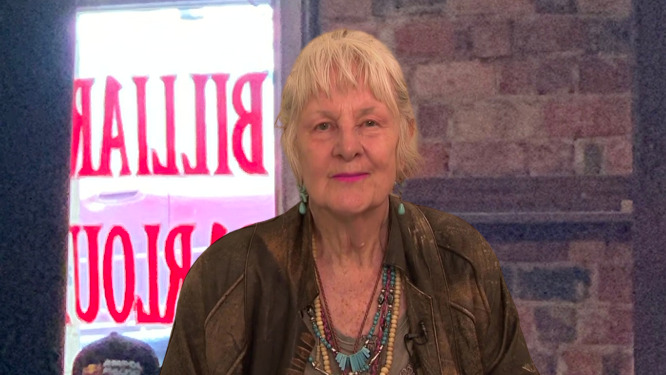
This image to the left is taken at the Kangaroo Hotel in Maldon victoria.
I began lugging a wind-up record player to school when I was five years old so that I could have music to listen and sing to and as a backing when miming or performing songs for my friends. From the start, I never doubted that I would be anything but a singer and that’s the way my life’s path took me.
When I was fifteen, I was smuggled into the Hampton Hotel between my friend’s parents so I could make a bee-line for the band leader, Mr Eddie Zavod. I asked him … ‘please could I sing with the band?’. In retrospect, it was amazing that he let me, because it wasn’t usual for bands to let kids up and sing with them. But that first taste was like riding a racehorse into the wind. That was it, I knew what I would be doing for the rest of my days.
My mother had begun her working life improvising the mood music for silent movies in the early 20’s. My father was a Hoyts Theatre manager. They met in and because of the theatre, so naturally I was entirely influenced by the moving picture shows! My life could be seen to be a reflection of everything from the The Wizard of Oz to Easy Rider and The Rose. My imagination was vivid and I’ve been lucky to survive the tightrope between reality and the projected image.
Working my way through the scout hall, reception, hotel and restaurant scenes, I was ushered into ‘residencies’ ie I was contracted to a particular hotel and sometimes I had my own room. In this way, I worked the Hotel Australia in Melbourne. The Terrance Room was so ‘french’ to me – the closest I’d been to Paris! I worked the Chevron and the Ritz Hotel with a modern jazz quartet in 1967 and this is where I met Brian Jones and Kevin Simmonds, who both pay with me on Vocal Chords and Shoestrings. I was in amongst the bump and grind, wearing silky gowns and loving it! The famous, fabulous Lido, owned by David McIlwraith, was in Melbourne’s only lavish nightclub which featured (amongst other things) a crystal chandelier, once owned by the Aga Khan, whilst the famous Lido Girls did their thing in pearls ‘n feathers and little else. I would appear with the Ian Mawson Trio, a modern jazz outfit, singing with Ian, Murray Wall and Kevin Simmonds from 10.00pm to 3.00am – it was all very ‘Follies Bergeres’. We opened the restaurant at Tullamarine Airport and stayed a year, loving the international audiences and watching the jets landing at night.
1963 – Hawthorn Town Hall – my first gig.
I branched out doing floor shows at night clubs at a time when, apart from the huge productions at the Lido, there were only two night clubs in Melbourne. Shoot outs and mysterious fires saw the last of them but it was fun while it lasted.
For one season, I was booked by the St Kilda Football Club to sing with their resident band every Saturday night. What a hoot! One night, during the gig, Daryl Baldock, St Kilda’s captain suddenly picked me up by the hips and carried me across the floor, like I was football or only weighed as much.
For a while, I made ‘roughs’ for commercial TV. Sadly, the entertainment scene changed almost overnight with the advent of discotheques. Hotels took their stages down, bandstands and dance floors disappeared and so did the musicians, the singers and the floor show artists. The Musicians’ Union did what they could to keep live music ‘live’ but the disco scene won out.
I worked the Rock and Roll business next, some backing vocals recorded and the Rhythm and Blues band called ‘Maximum Load’. An audition for Jesus Christ Superstar had me flying up to Sydney to do rock soprano parts with the original cast.
After ‘Superstar’, I hit the road Joplin style in a Greyhound bus bound for Western Australia where I joined a Rock Show band who travelled up and down the West Coast and on returning to Melbourne, began singing with the ‘Les Swinges Modern’ – a Django Reinhardt inspired Hot Club band with as many as 12 musos on stage plus sit ins.
1977 and the Bopbenders started up at the Grainstore in Melbourne. The crowds loved BeBop and we stayed there for 18 months. Numerous bands, University concerts, peace rallies, fund raisers, weddings, a stint at the Last Laugh comedy club and a gig for the Prime Minister brought me into the 80’s. I began putting my own shoes together and working Arts Festivals. A highlight being the honour of appearing with Norman Simmonds, Rufus Reid and Kenny Washington. For several years, I performed at Jazz After Dark at the Melbourne Arts Centre.
I made many videos that didn’t work due to lack of funds, financed many of my own shows and concerts and have had the privilege of working with the cream of Melbourne’s musicians.
In 1993, I moved to Central Victoria where mostly Rhythm and Blues, Rock and Roll, Country and Western and Folk music goes down. Despite that, I’ve managed to continue to work and introduced people to the modern sounds I love so much.
In 1997 I financed my own CD and recorded for the first time.
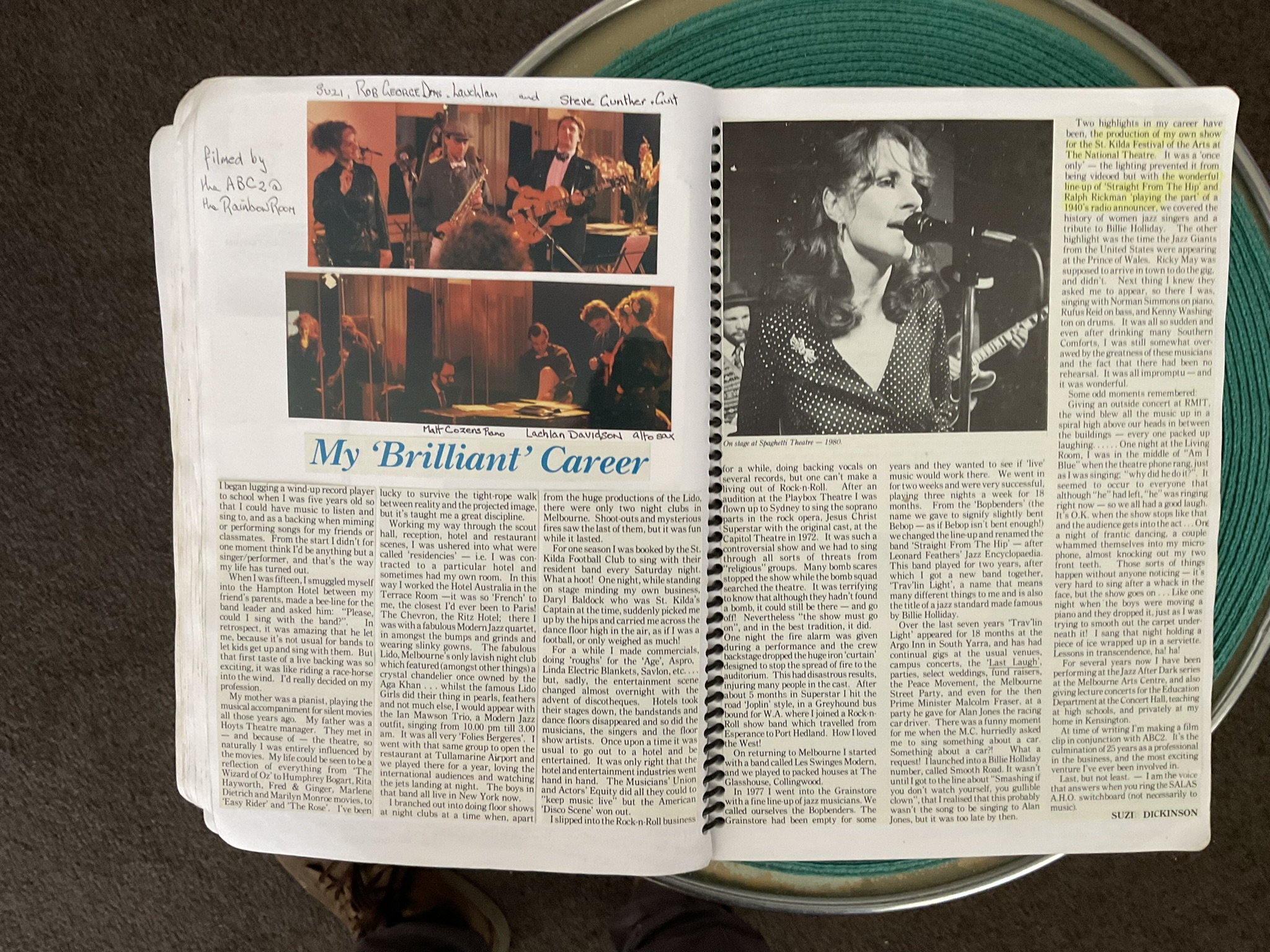
Written by David James after interviewing Suzi in 2009. David is a jazz musician and journalist at the Business Review Weekly.
Despite Psychiatric Trauma, She Sang
Likened to Billie Holiday and named Australia’s own Lady Day by many, Jazz singer Suzie Dickinson has battled a lifetime of Clinical and Major Depression. At a time when depression is considered a major mental health problem, hers is a story of how she survived her demons with music her only escape.
A veteran performer of 46 years herself, Dickinson’s family has a long pedigree of Theatre and Performance. She has established herself as one of Australia’s permier Jazz performers, matching nuance and vocal skill with deep expression.
Like Holiday, Dickinson had a troubled childhood.
Her father from age 17, fought at Gallipoli, Egypt and France in the 14-18 World War. It took a terrible toll. He also served in the Second World War.
“I was born in 1945”, says Dickinson. “My Dad died in 1952. I was a very sad child. I never knew the Dickinsons – they had all died and were never spoken of. When my mother was dying, she told me that Dad had raped her and I was just the result of that rape. Suddenly things fell into place for me, I was 43.”
Dickinson’s father had a vaudeville act in the 1920’s at the Tivoli in Melbourne. ‘Dickie Dickinson’ – Comedian and Singer. He was a political cartoonist and sculptor and worked with Frank Thring Sr above St Moritz making the first moving pictures and cartoons.
Her mother Ula played piano front of screen, improvising the ‘scene moods’ for silent movie audiences.
Her Aunt Maggie Dickinson was the Principle Dancer for JC Williamsons and was famous throughout the 1910’s and 1920’s.
“I remember the first time I heard ‘live’ music. My brother-in-law Bruce Clarke, a Jazz guitarist, was having a jam session in my Mum’s lounge room. Ron Terry on bass, Billy Hyde on drums, Ronny Rosenberg on piano and a singer named Georgia Lee – a Torres Strait Islander. I was spellbound by her”.
Dickinson starter singing early. “Much to my mother’s annoyance, I left school at 15 to become a singer. Mum didn’t want me anywhere near the theatre. I started singing professionally in 1963. I always knew I was a singer.”
Holiday famously struck up a profound musical partnership with the saxophonist Lester Young (who dubbed her Lady Day) and Dickinson established a lasting musical and personal partnership with one of Australia’s leading jazz pianists, Ian Mawson.
The savage ‘black dog’ continued to maul her. Mental illness had taken an iron grip. “I recently learned my father was a broken man when he returned from the First World War. I believe most of his mental hell passed onto me.” Dickinson experienced inexplicable episodes of terror, a hell she described as ‘no man’s land.”
1972 she sang in the original cast of Jesus Christ Superstar in Sydney and the heaviness of Kings Cross and unfamiliar surroundings brough on an agoraphobic terror state.
On her return to Melbourne, she was subjected to electric shock treatment. She has spent her life struggling to continue her dream. The only time she felt alive with a right to ‘be’ was when she was on stage singing, which she does so well. Hers is a style of contrarieties. Exploring through music the deep wells of contradiction in mind and emotion. Just as Billie Holiday found a way to take jazz singing into new realms of expression, Dickinson has found musical ways confront the darker side of the psyche and find light on the other side.
“In 2006, I played the title role in a show called ‘I Could Have Been Carmen’ for Professor Neil Cole of the Alfred Hospital Psychiatric Research Department”, says Dickinson. “It showed the sense of connection and the benefits that go with performing for bi-polar and schizophrenic people. Before the show, I sang a jazz set with Don Bridges, the renowned jazz guitarist and actor. He directed the play too.”
Venerable Losang Tensin was in the audience, accompanied by Gen Thupten Khedup. Gen Khedup is a Gyuto Monk and Stup maker for his Holiness the 14th Dalai Lama. “I had been attending Ven Tensin’s meditation classes from 2003 and I had belonged to the Tibetan Buddhist Society since 1988.”
Raising money for the Tibetan cause became a priority for Dickinson.
In January 2007 a Centre was opened where Gen Khedup taught Dharma and Meditation. “I have benefitted so greatly from Gen Khedup’s teachings and care. I am now 64 years old and feel stable for the first time in my life. I wish all people struggling with psychiatric trauma could learn from the Buddhist teachings. My intention is to be able to support the Tibetan cause, best was I can by occasionally performing and the through the sales of my CD’s.”
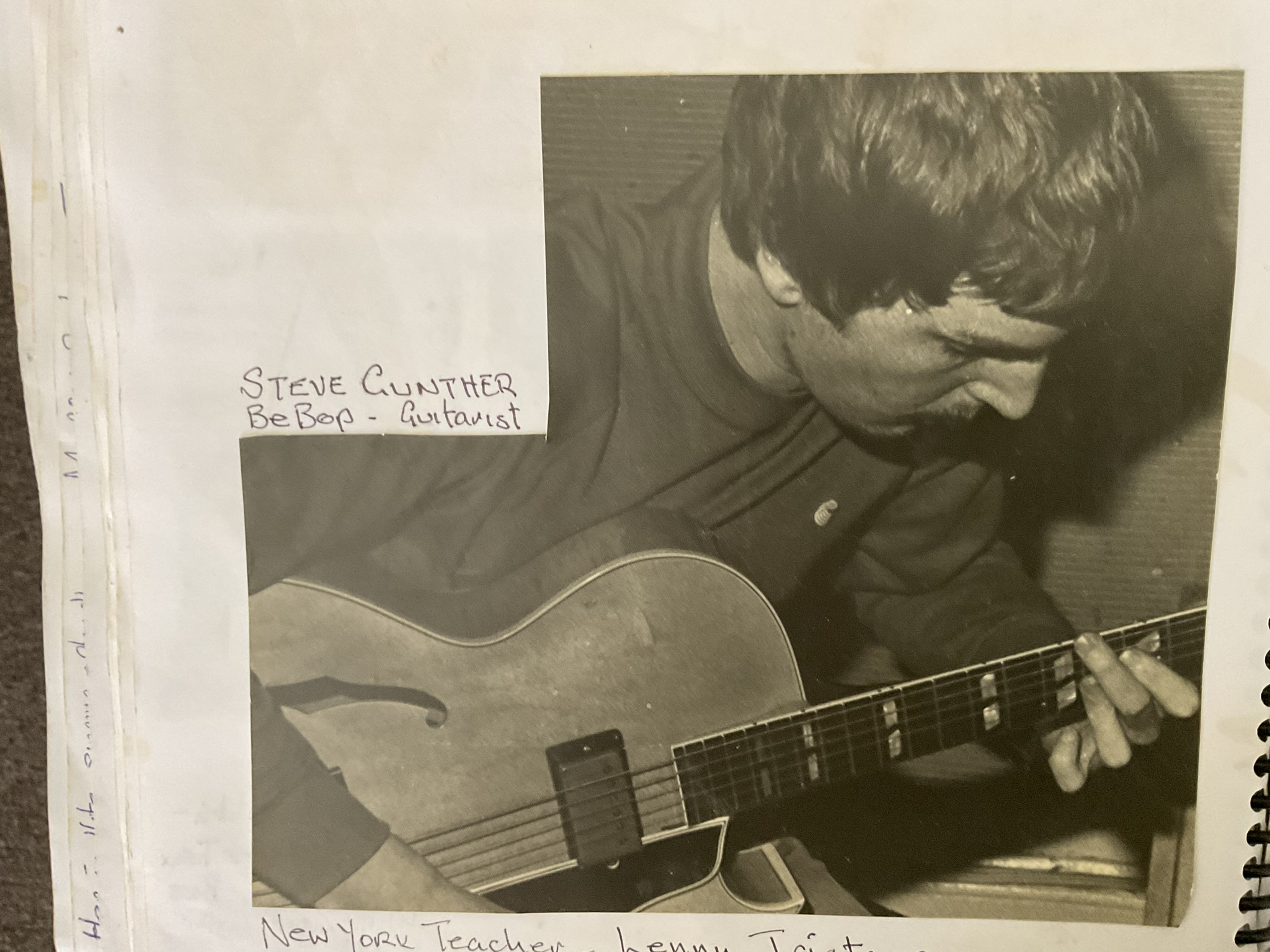
Steve Gunther
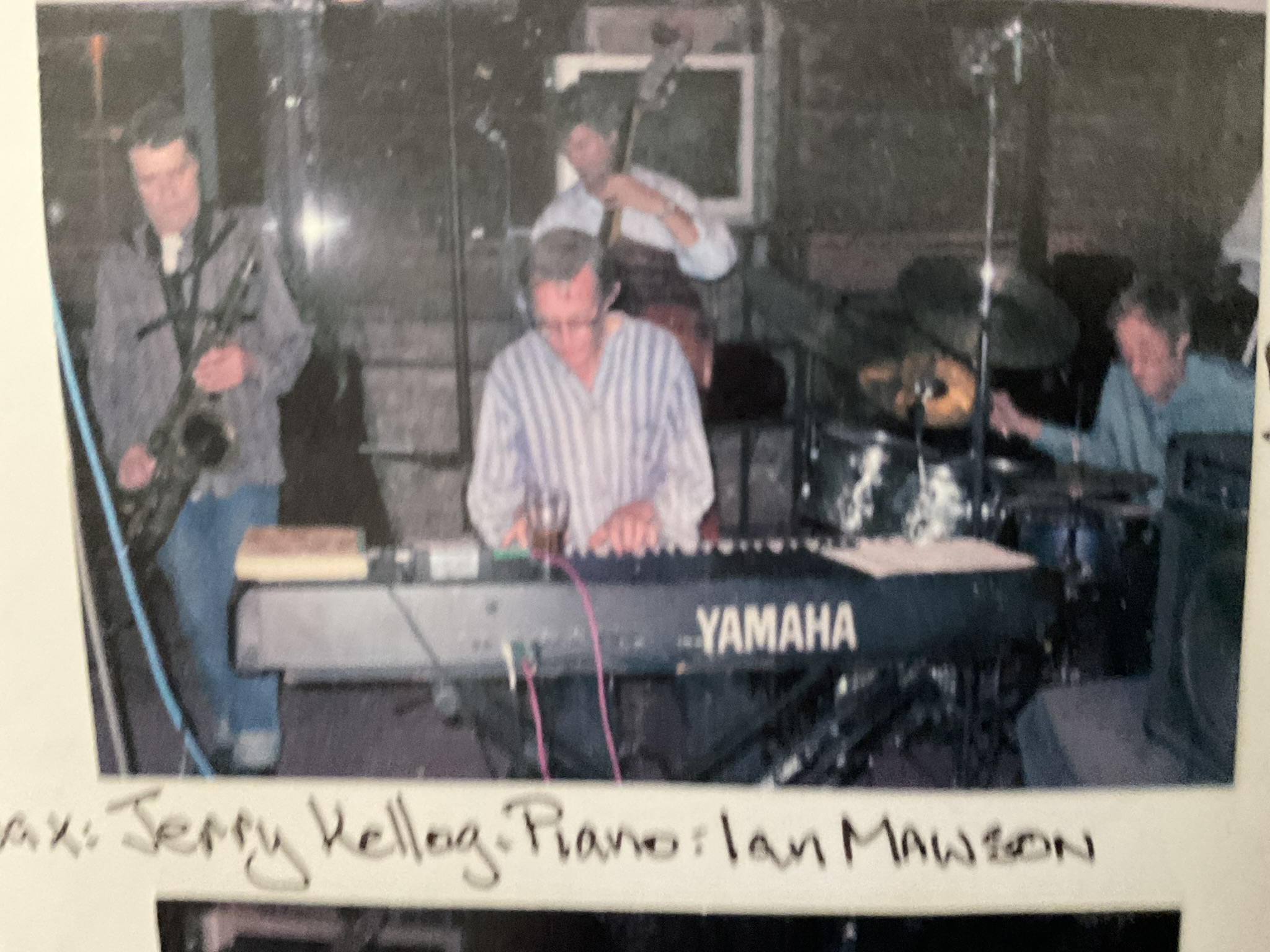
Jerry Kellog and Ian Mawson
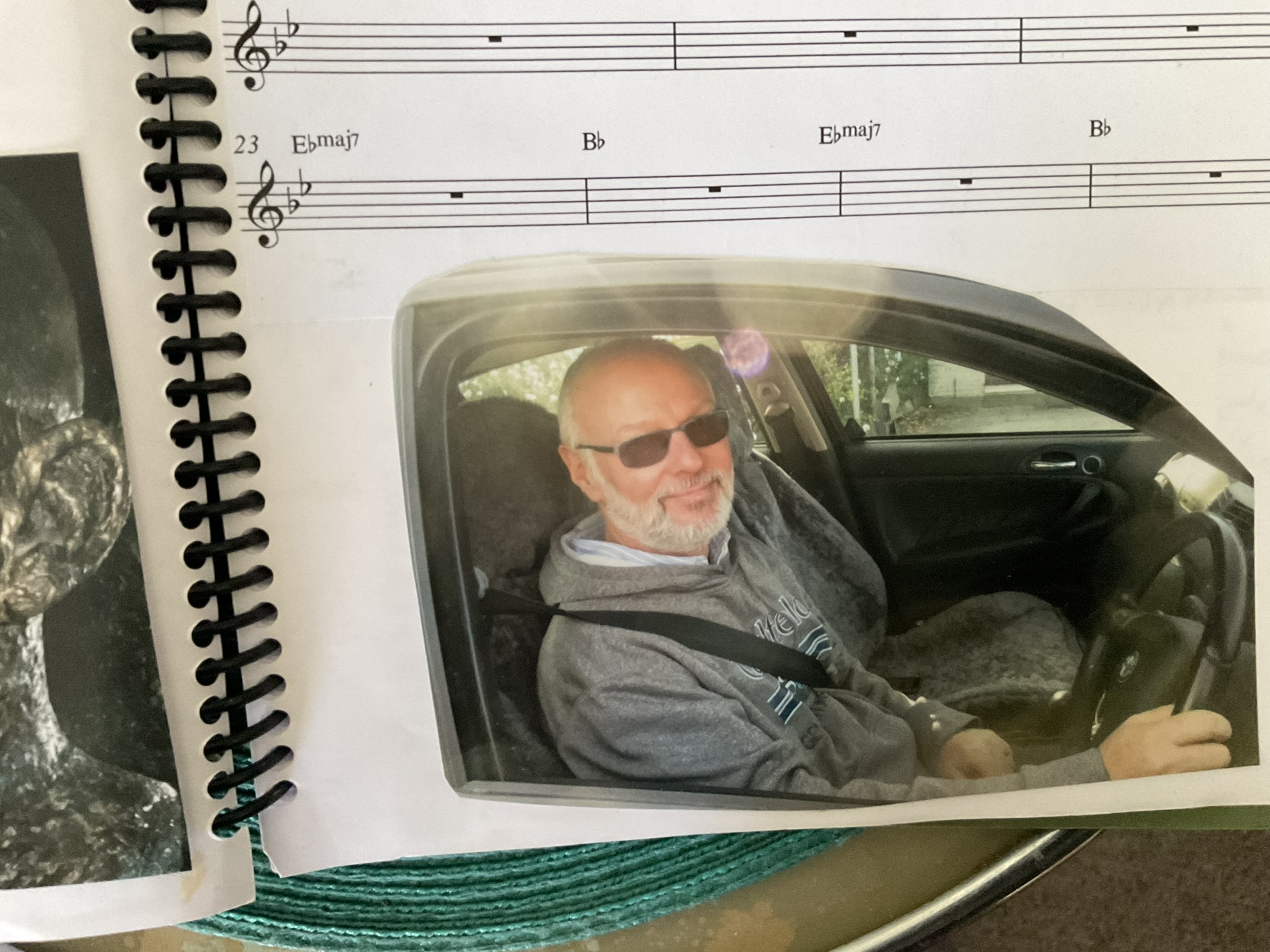
Lachlan Davidson
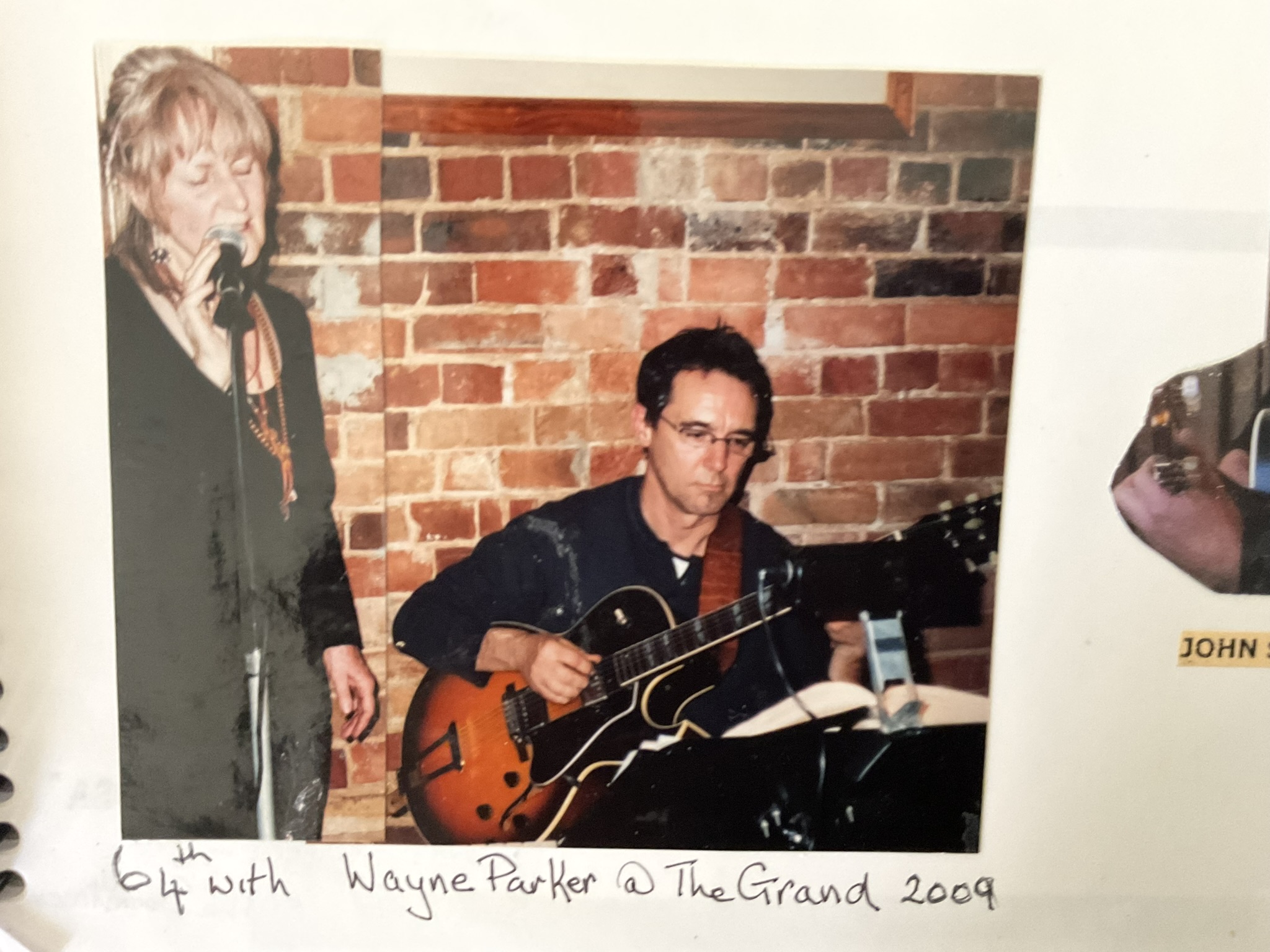
Me and Wayne Parker